The unveiling ceremony of the book “Istighatha; The Key to Reappearance”
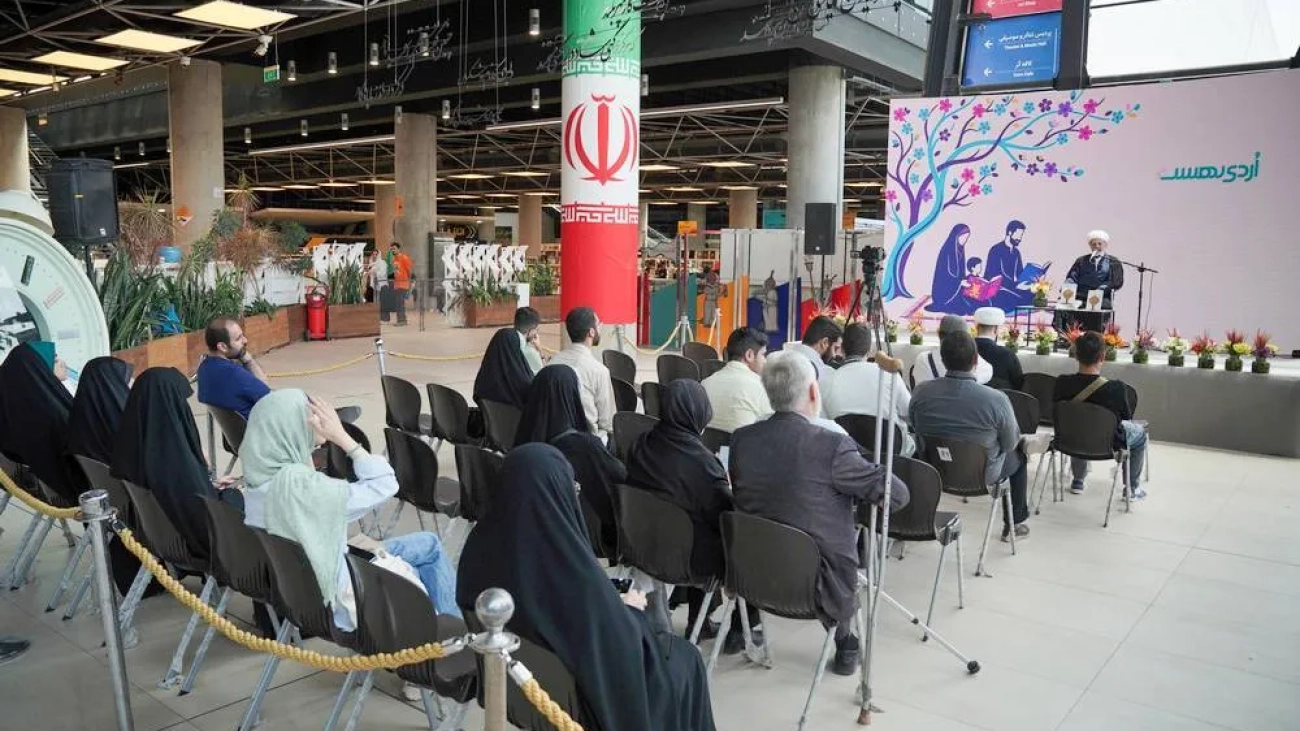
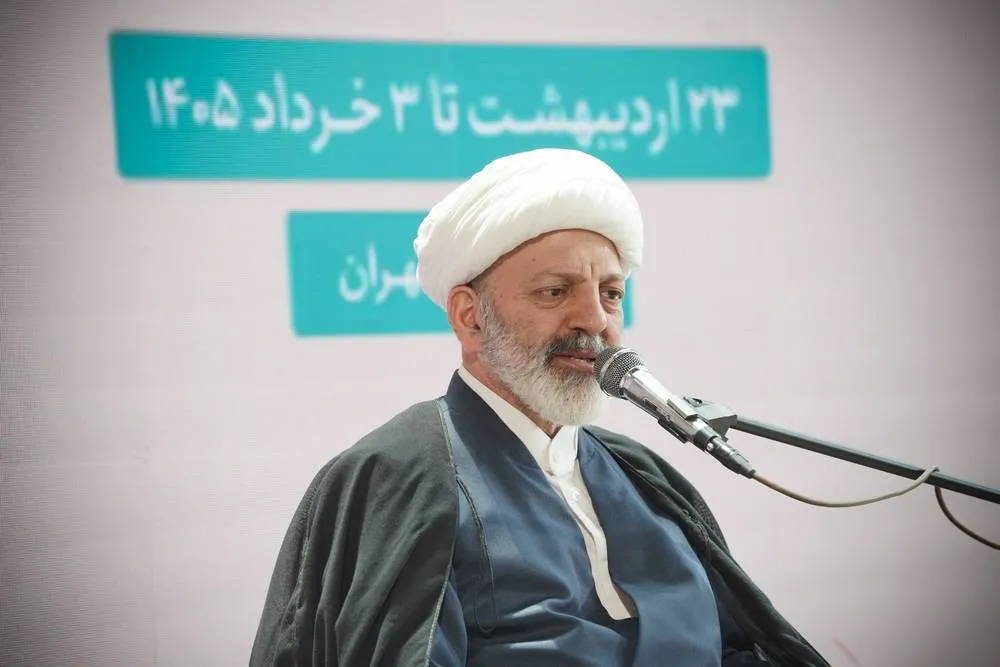
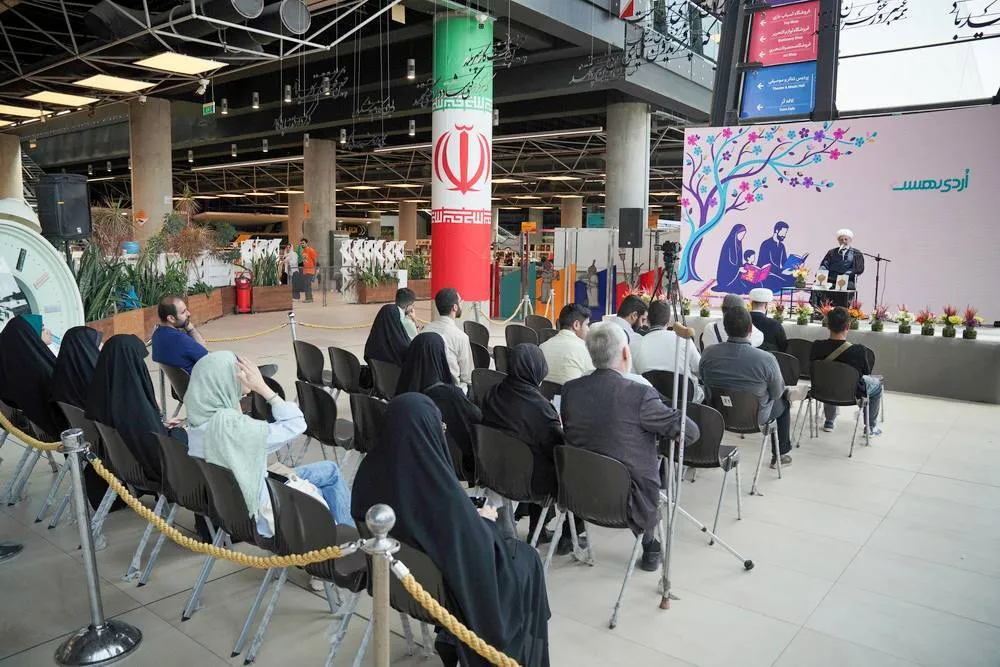
The unveiling ceremony of the book “Istighatha; The Key to Reappearance” was held on the morning of May 14 at Bagh-e Ketab (Book Garden), with the presence of Professor Mohammad Shojaei. During the ceremony, Professor Shojaei emphasized that human beings are dependent on God and that claiming self-sufficiency is merely an illusion. He stated: “In the illusion of independence, people deprive themselves of God. Through prayer, a person comes to recognize their connection to and need for the Almighty.” He stressed the importance of sincerity in supplication and the belief that “nothing can be accomplished without Him.” He added: “When we distance ourselves from the source of power, we should expect difficulties. God has assigned a measure and order to everything, and no one can succeed by violating these divine laws.”
Referring to the fact that misguidance prevents people from achieving their goals and causes them to lose valuable opportunities, he described faith as one of the key conditions for success and said: “God has not decreed defeat for this nation, and in reality, there is no scientific or genuine basis for its failure.” According to him, focusing on the concept of Istighatha alone constitutes half the path to success. He described Istighatha as “the master key to both collective and individual achievements.” Explaining the meaning of “ʿabd miskīn mustajīr” (a humble and needy servant seeking refuge), Professor Shojaei stated that turning to God in one’s utmost need is the foundation of this path. He remarked: “If we move forward relying on anything other than God, we are placing ourselves in danger.”
In conclusion, he identified kindness, empathy, and the development of inner capacity as essential conditions for attaining success and blessings. He also described laziness and lack of motivation as the two primary causes of misery and failure. The book “Istighatha; The Key to Reappearance”, written by Mohammad Shojaei, has been published by Mohyi Publications. The book consists of 200 pages and is released in a standard octavo (raq’i) format.
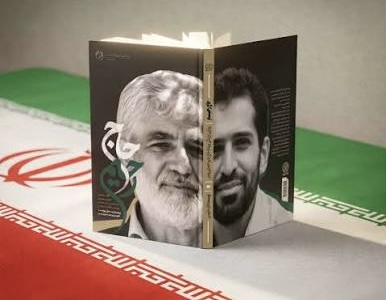
The Book “Haj Rahim” Unveiled
The unveiling ceremony of the book “Haj Rahim”, written by Faezeh Tavousi, was held at the Shahnameh Hall of Tehran’s Book Garden. At the beginning of the event, in response to the moderator’s question about the challenges and reasons for choosing the subject, Faezeh Tavousi said: “My first encounter with Haj Rahim’s character was at the Ammar Film Festival in 2022, at the Oral History booth. At the time, the parents of Martyr Ahmadi Roshan had attended the festival, and we were preparing a series of interviews about mosques with various individuals. Later, I was offered the opportunity to turn the collection of interviews conducted with Haj Rahim into a book.” She explained that before the Islamic Revolution, when Haj Rahim was serving in the police force and came under pressure from SAVAK, he chose to remain in Iran despite imprisonment in solitary confinement and other hardships, never leaving the country. According to Tavousi, perseverance and steadfastness were not merely temporary traits but the defining characteristics of Haj Rahim’s personality. She noted that this spirit was evident throughout his life—from his presence on the battlefronts of Gilan-e Gharb and Dezful to the martyrdom of his son, Mostafa. Another significant theme of the book, she said, is the revolutionary upbringing of the family, which she considers its most important aspect. As an example, she referred to the story of a minibus that sparked Mostafa’s interest in technical and engineering work, emphasizing how Haj Rahim played a foundational role in shaping the character of a future martyr. She also highlighted the family’s commitment to the principle of Velayat-e Faqih (guardianship of the Islamic jurist), describing it as widely recognized among Iranians. Tavousi added: “I see a connection between this book and the discourse of progress, particularly where Haj Rahim discusses the nuclear issue and criticizes the JCPOA (Iran nuclear deal).”
Speaking about readers’ reactions to the book, the author said: “This book was not specifically written for teenagers. However, I have seen young readers who, after reading it, became engaged with issues such as Iran’s nuclear program, the JCPOA, and the demands and expectations expressed by the Supreme Leader, gaining greater awareness of these subjects.” She explained that she intentionally wrote the narrative in a simple style and as close as possible to the narrator’s own voice. The manuscript underwent five revisions to ensure readability and a smooth, accessible style. Referring to the scarcity of books focused on the fathers of martyrs, she said: “This aspect was particularly interesting to me and became my main motivation for writing the book. Most books about martyrs focus either on their wives or their mothers. Yet, if we look carefully, the lawful livelihood that a father provides for his family can have a profound influence on the formation of a martyr’s character.” She concluded by stating: “The Iranian nation has introduced some of the world’s greatest heroes to the realm of dramatic storytelling.”
During the event, Vahid Jalili stated: “Many of our intellectuals and writers discuss events and regard stories and heroes as important subjects, yet they remain indifferent to some of the deepest and most significant dramatic narratives in contemporary Iran. The Iranian nation has introduced some of the world’s most remarkable heroes to the realm of drama, and this level of neglect by Iran’s Western-oriented intellectual circles is itself a dramatic phenomenon.” He continued: “The ups and downs of Haj Rahim’s life story—from childhood to adolescence, from the pre-revolutionary era to the post-revolutionary period—are truly compelling. A young man who experiences the Iran’s Revolution in Hamedan, returns there afterward, encounters various challenges, gains diverse experiences during the Sacred Defense (Iran-Iraq War), leaves his position in the police force, and later works as a minibus driver providing transportation for schools and factories. Ultimately, a child is raised in this family who grows into a figure considered significant enough that the world’s greatest powers allegedly plan to remove him from their path.”
Jalili further noted: “In the field of social history, we have produced relatively few works, although we have had more output in political history. Yet, as Imam Khomeini stated in 1988, ‘The history of the Revolution is not merely political; it is a social phenomenon.’ We are still weak in this area.”
Concluding his remarks, he commented on the book itself: The book has a strong and engaging opening, a pleasant style of writing, and language that is both appropriate and well-balanced. Its references to popular culture effectively convey the honesty and simplicity of Haj Rahim’s life, both in content and in form.”
Following Jalili’s remarks, Mohammad Sadegh Shahbazi said: “Haj Rahim is genuinely captivating and is one of those books that is difficult to put down. In this book, you do not merely witness the ups and downs of Haj Rahim’s life from childhood to old age; you witness the rise and transformation of an entire nation.” He explained that the book portrays the growth of the Iranian people throughout the revolutionary process, showing how Iranians developed together, pursued shared aspirations, and paid the costs necessary to achieve them. “The movement that began in the 1980s reached fruition in the 2000s. I often describe this process with the phrase: The passionate decade of the 1980s, the inspiring decade of the 2000s.” Shahbazi added: “This book is also a valuable resource for understanding people in specific regions of Iran. Rather than relying on broad generalizations, it focuses on Yazd and Hamedan and offers a detailed look at everyday life. It shows how families raise children with dignity, responsibility, and strength.” He further noted that the theme of progress is clearly reflected in the narrative, particularly in the way Mostafa is raised and educated: “The story demonstrates how Mostafa was nurtured simultaneously along the paths of personal development and social growth.”
Review and Discussion Session for the book “Hamdam: Mother of the Frontlines”
A review and discussion session for the book Hamdam: Mother of the Frontlines was held on Thursday, May 14, at 10:30 a.m. on the Ivan-e Khial stage (Hall of Imagination) at Tehran Book Garden. The session featured Fatemeh Soleimani Azandarian as the critic and expert, alongside Katayoun Rajabi-Rad, the author of the book.
At the beginning of the session, Soleimani remarked: “I read the book several years ago, but I reviewed it again for this session so that I would be fully familiar with it. The book tells the story of your grandmother’s life, who was known as ‘Hamdam.’ Was she also called Hamdam within the family?” Rajabi replied: “Within the family, we called her ‘Mother,’ and she preferred to be addressed by her official name, Zahra. She often complained that because her name sounded similar to her sister Zamzam’s, people ended up calling her Hamdam.”
Referring to the literary concept of the “death of the author,” Soleimani asked: “In literature, we have the concept of the death of the author, where the writer leaves the interpretation of the work to the readers and avoids explaining or interpreting it. Almost everyone knows that this book is about your grandmother, but only in the final chapters does it become clear that the author visits her grandmother and reveals their relationship. Why did you choose this approach and keep the family connection hidden until the very end?” Rajabi explained: “I was not trying to deceive anyone or employ a special literary technique. I simply wanted to be myself, and my emotions prevented me from revealing the truth until the final pages. I tried to narrate the story in the third person and continue the narrative for as long as possible before introducing myself. I allowed my emotions to guide me and wanted to see how far I could take the story without disclosing our relationship. By the final pages, I could no longer stop myself from calling her ‘Mother.’ I am the eldest grandchild, and wherever she went, I accompanied her. Among all family members, I shared the most memories with her. This book is the result of my deep attachment to her.”
Soleimani then asked: “My main question is: why did you decide to write this book, and why didn’t you do it earlier?” The author responded: “Mother wanted her story to be written much earlier. Within our family, there were two different perspectives. My uncle preferred to remain anonymous and did not want his stories told. My grandmother, however, believed she was obligated to share these experiences because of a martyr’s last request that she never allow them to be forgotten. She also had an extraordinary memory and remembered every detail.” Soleimani followed up: “So the book could have been much longer?” Rajabi replied: “Absolutely. It could easily have been three or four times its current length. There are many documentaries, interviews, and films about Mother, but I wanted to act as a thread connecting the beads of a rosary—to retell her stories from a maternal perspective and highlight an important dimension of her character. I wrote countless notes and scattered memories, then gradually arranged them into a coherent narrative. My uncle also preferred that I not write about him. But since he had been martyred, I thought he could no longer object, so I included many stories about him as well. After finishing the manuscript, however, my hard drive crashed. Everyone told me it was beyond repair, but after tremendous effort, we managed to recover the files. Once the data was restored, I visited my uncle’s grave and said, ‘I won’t write about you anymore—just pray that this book finds its way.’ After that, I removed all the stories I had written about him.”
Discussing the craft of writing, Soleimani noted: “There is a section of the book set in a hospital. As a writer, I noticed that some of the smaller episodes—such as the references to fasting and halva—seem to have been intentionally constructed as bridges to the past. This is not necessarily a flaw; writers often need narrative devices to move between scenes. However, these moments somewhat diminish the sense of authenticity for me. Since we are dealing with a narrative work, it is not a problem, and perhaps many readers would not even notice it. The story could have progressed without an explicit narrator, but the author chose to become part of the narrative. Usually, the narrator and the author are separate. The narrator is a fictional figure created by the author to tell the story. In this book, however, the narrator and the author are the same person, and the author could not completely conceal her emotions. Some may criticize you for that, but considering that you are the granddaughter of the main character, one can also understand your position. It is truly a double-edged sword. While reading, I assumed that the present-day narrative was partly constructed, whereas the historical sections were more authentic.” Rajabi responded: “Several people, including Dr. Esmaeil Amini, gave me similar feedback. They appreciated the suspense created between the real and imagined aspects of the narrative and among the different characters.” Soleimani added: “I wish I had read the book without any prior knowledge. From the beginning, I knew that you were related to the central figure, and I could not approach the story with a completely open mind. Perhaps that is why I focus on these criticisms.”
The author of Hamdam: Mother of the Frontlines continued: “Because I was involved in promoting and selling the book, I witnessed readers’ reactions firsthand. Before reading it, people approached it quite casually. After finishing it, however, they came back with much greater enthusiasm and empathy, eager to share their feelings. I wanted readers to keep wondering what relationship the narrator had with Hamdam and why she was so close to her.” When asked whether another book about Hamdam might be written, Rajabi replied: “I think it is possible. Motherhood and motherly devotion can never be exhausted in literature. Every culture and faith regards it as a noble and profound theme, and thousands of books could be written about it. However, I do not think I will personally undertake another book. I had so many stories and materials from Mother that I felt little need to conduct extensive interviews with other family members. I only had brief conversations with them and based the main narrative on Mother’s own recollections.”
Regarding the timing of the project, she said: “I began writing about seven or eight years after Mother’s passing. In hindsight, I delayed too long and should have started earlier. Mother once told a story about standing beside a wounded soldier whose abdomen had been pierced by shrapnel and whose hand was severely injured. She asked him, ‘Why did you do this to yourself, young man?’ He replied, ‘I am a teacher. I came to war to defend my homeland and its honor.’ Mother then asked him to write those words down and sign them so she could show them to students in schools. The young man wrote his message and marked it with the blood from his wound. Then he said to her: ‘You will be accountable if you do not share these words with others.’ That moment marked the beginning of Hamdam’s mission to preserve and tell these stories.”
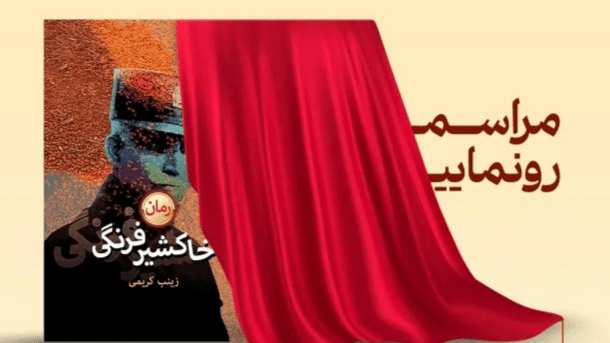
Review and Discussion Session of the Book “Khaksheer-e Farangi“
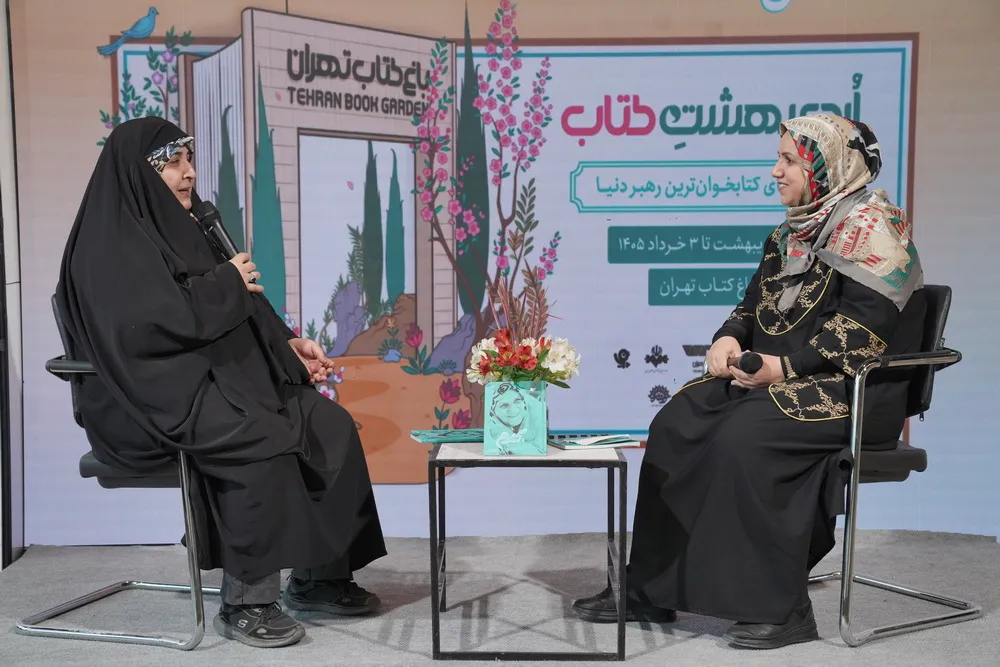
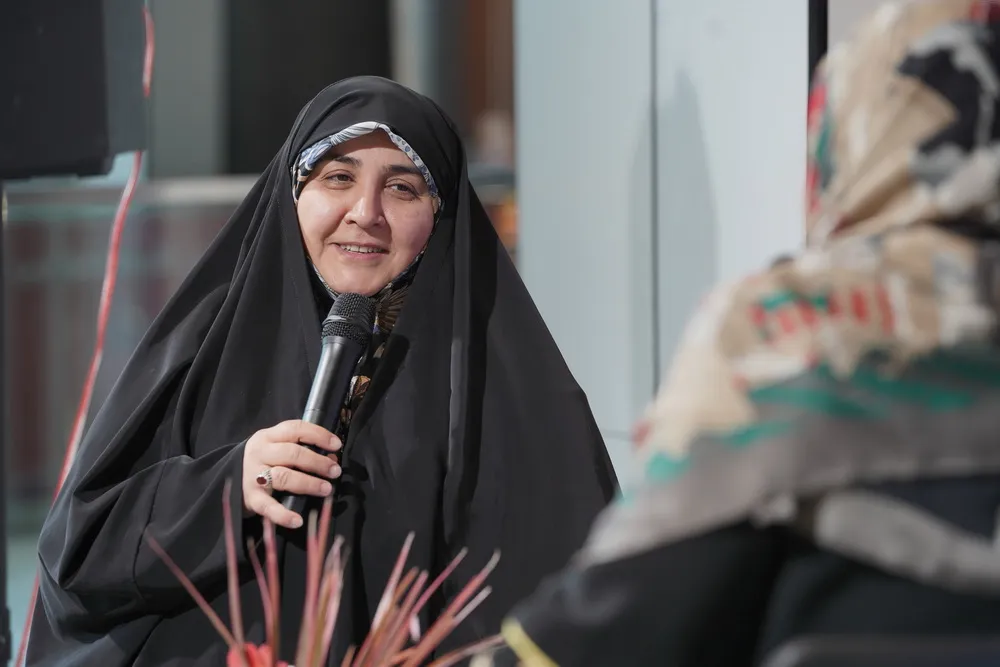
A review and discussion session for Khaksheer-e Farangi was held on Thursday, May 14, at 4:00 PM at the Ivan Shahnameh Stage of the Book Garden cultural complex. During the session, the book’s author, Zeinab Karimi, stated: “History repeats itself. We have many historical books, but why do they not attract a wide audience? Perhaps because reading history is often difficult for teenagers, young adults, and even older readers. I preferred to bear that difficulty myself. It is my responsibility to conduct the research and then present it in the accessible form of narrative literature. If history did not repeat itself, there would be no need for such work. However, today we see that the questions and doubts of young people are often the same as those raised in the past, and history is repeating itself. I consider it my duty to contribute in this field.”
In response to a question about whether the character of Ardeshir Reporter was based on a real person, she explained: “The initial idea for the story was provided by Qadr-e Velayat Publications, who introduced me to the life story of Ardeshir Reporter. Later, I conducted my own research and discovered what a fascinating and neglected figure he was in our history. Ardeshir Reporter belonged to the Reporter family, a group of Iranian-origin Indians involved in journalism. During the Constitutional Revolution, when the demand for justice and parliamentary representation became prominent, he established close ties with the British Embassy and the Bahá’í community. Some Zoroastrians even condemned him, believing that he was steering the pure Zoroastrian faith toward Bahá’í beliefs.”
Karimi continued: “One of the statements attributed to the martyred Leader is that the people of Iran sought a parliament of justice, but figures such as Ardeshir Reporter diverted the movement toward constitutionalism. This eventually led to the shelling of the parliament and the marginalization of religious scholars. One of the themes explored in the book is how Ardeshir Reporter redirected a sincere movement for justice.”
She further noted that, according to his alleged will, Ardeshir Reporter wrote to his son, Shapur Reporter, saying: “I identified a man in Iran named Reza Cossack and helped him advance,” thereby presenting his own role in Iran’s domestic politics and in altering the course of the popular movement. Addressing the relationship between history and literature in the novel, Karimi said: “In my opinion, if the balance between history and literature is handled in a certain way, the result is no longer truly a novel. My goal is to write a compelling story while also allowing readers to encounter history. I write stories in which historical elements run beneath the narrative. There was a debate surrounding my previous book, Chini-Bandzan, because at times the line between fact and fiction became blurred. This book is precisely the opposite. For the previous work, we included a lengthy introduction and an extensive bibliography, but some criticized us, asking whether a novel really needed such features. Therefore, in this book we removed both the introduction and the bibliography.”
When asked about her purpose in creating the family characters, she explained: “When I begin describing a family, I already have a vision in mind of where each family member should arrive later in the story. In general, I first imagine the character’s ultimate destination and then create the details of their personality. For example, the concerns of fathers today are very similar to those of fathers 125 years ago. The mother of the family experiences harassment during her adolescence. The choice of Yazd as a setting was connected to Ardeshir Reporter’s ties with the Bahá’í community there. Every event in the story was designed to unfold logically.”
Discussing the choice of blacksmithing as a profession, she stated: “The selection of horseshoeing and blacksmithing was intentional because blacksmithing symbolizes hard work and perseverance. By the end of the novel, the protagonist chooses to work in his father’s forge rather than remain involved in a political movement that has lost its way.” Karimi also emphasized the depth of her research: “Sometimes I spent weeks reading just to discover what workers were called 125 years ago, what printing houses were called, or how they functioned. The only thing that saved me was study, and more study. I even read obscure historical works and unrelated travel memoirs. I researched clothing colors, fabric types, and every other detail. A book by Mr. Jafar Shahi was particularly helpful in my description of Tehran’s ta’zieh performances.”
In her concluding remarks, she explained the choice of Shemiran as the family’s place of residence: “The idea was to place the family close enough to Tehran to be affected by the Constitutional Movement, yet far enough away that access to the city and its facilities would not be easy. In addition, my family had lived there, so I possessed a great deal of firsthand knowledge about the area.” Regarding her focus on the character of Ardeshir Reporter, whom she portrays as publicly Zoroastrian but secretly Bahá’í, Karimi concluded: “If there had been only one Ardeshir Reporter, it would hardly have been worth writing about. What matters is that there are many ‘Ardeshir Reporters’—individuals who divert movements for justice and popular uprisings from their original course and, at the decisive moment, exert their harmful influence.”
Review and Discussion Session for the book “The Bomb Explosion at Grandpa’s House”
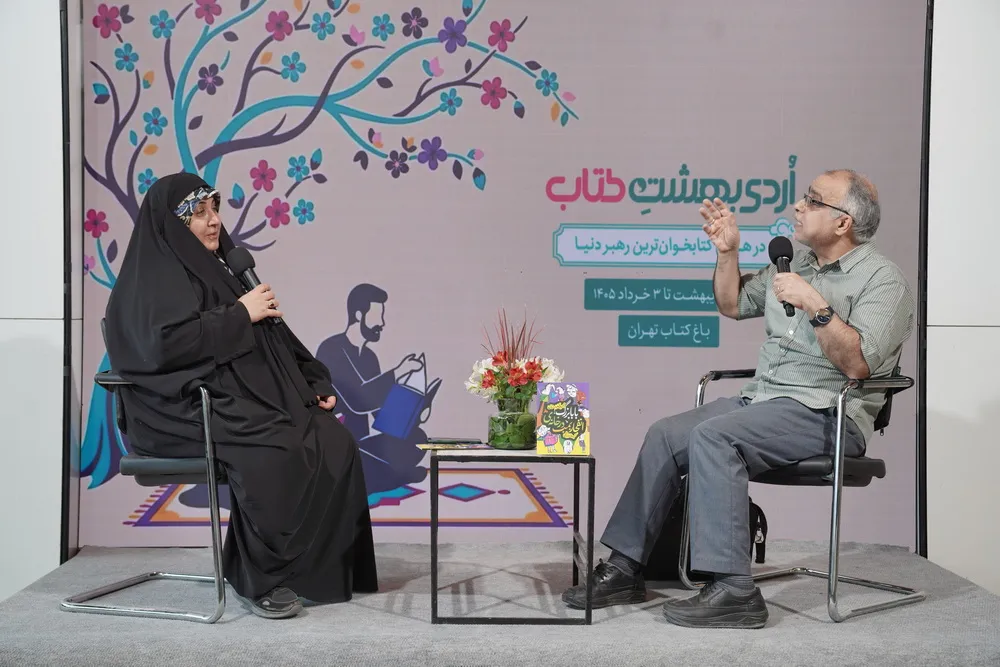
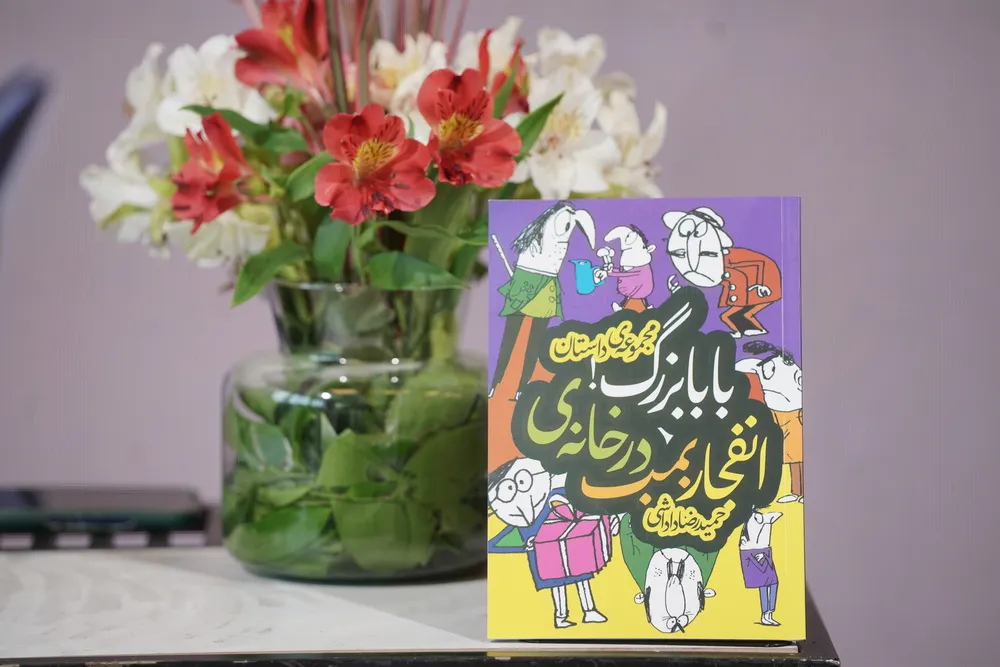
A review and discussion session for the book The Bomb Explosion at Grandpa’s House by Hamidreza Dadashi was held this afternoon as part of the “Ordibehesht-e Ketab” (Book of Ordibehesht) event. During the session, the author, Hamidreza Dadashi, spoke about the process of developing and writing the book. Referring to the idea that “I think a story chooses the person,” he explained that although he wrote the book during his teenage years, the experience inspired him to pursue writing for young adults. Speaking about his preference for writing serialized or short stories, he said: “I have two serialized works: Uncle Troublemaker and this book, The Bomb Explosion at Grandpa’s House. Of course, it depends on what the subject demands, but in serialized stories, readers tend to form a stronger connection with the work.” The session concluded with the participation of enthusiasts of children’s and young adult literature.
The Bomb Explosion at Grandpa’s House by Hamidreza Dadashi is a collection of 19 interconnected stories written with themes rooted in Iranian social, religious, and cultural lifestyles, while also incorporating elements of humor. The stories are narrated by Amir, a teenage boy in the family. In each story, interesting events unfold, and Amir’s encounters with these situations and the people involved influence him and enrich his life experiences. Some of the stories in the collection include The Bomb Explosion at Grandpa’s House, Fathers Like to Keep Secrets, The Landing of the Guardian Angel with the School Dad’s Wings, Grandma, I’d Walk on My Eyelashes for You!, Outdoing a Spaceship Driver, The First Lesson of School, and Fishing in the Morning Traffic Jam.